



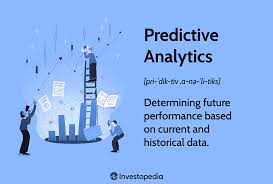

The Power of Predictive Data Analytics
In today’s data-driven world, businesses are increasingly turning to predictive data analytics to gain valuable insights and make informed decisions. Predictive analytics involves the use of statistical algorithms and machine learning techniques to forecast future outcomes based on historical data.
One of the key benefits of predictive data analytics is its ability to identify trends, patterns, and relationships in data that may not be immediately apparent. By analysing past behaviours and outcomes, businesses can anticipate future trends and make proactive decisions to stay ahead of the curve.
From predicting customer behaviour and preferences to forecasting market trends and demand, predictive analytics empowers businesses to optimise operations, enhance marketing strategies, and improve overall performance.
Moreover, predictive data analytics can help businesses mitigate risks by identifying potential issues before they escalate. By leveraging predictive models, organisations can anticipate challenges, streamline processes, and implement preventive measures to minimise disruptions.
Furthermore, predictive analytics plays a crucial role in enhancing customer experience. By analysing customer data and behaviour patterns, businesses can personalise offerings, tailor marketing campaigns, and provide targeted recommendations that resonate with individual preferences.
As technology continues to advance and data volumes grow exponentially, the role of predictive data analytics will only become more prominent. Businesses that harness the power of predictive analytics stand to gain a competitive edge in today’s fast-paced digital landscape.
In conclusion, predictive data analytics offers a powerful tool for businesses seeking to leverage data-driven insights for strategic decision-making. By unlocking the potential of predictive analytics, organisations can drive innovation, improve efficiency, and unlock new opportunities for growth in an increasingly complex business environment.
Understanding Predictive Data Analytics: Key Questions and Insights for Businesses
- What is predictive data analytics?
- How does predictive data analytics differ from descriptive and prescriptive analytics?
- What are the benefits of using predictive data analytics for businesses?
- What types of data are commonly used in predictive analytics models?
- How accurate are predictive analytics models in forecasting future outcomes?
- What industries can benefit the most from predictive data analytics?
- What are some common challenges faced when implementing predictive data analytics solutions?
- How can businesses ensure the ethical use of predictive data analytics?
What is predictive data analytics?
Predictive data analytics is a sophisticated approach that utilises statistical algorithms and machine learning techniques to forecast future outcomes based on historical data patterns. By analysing vast amounts of data, predictive analytics helps businesses uncover valuable insights, trends, and correlations that can be used to make informed decisions and anticipate future scenarios. Essentially, predictive data analytics empowers organisations to proactively address challenges, identify opportunities, and optimise strategies by leveraging the power of data-driven predictions.
How does predictive data analytics differ from descriptive and prescriptive analytics?
Predictive data analytics, distinct from descriptive and prescriptive analytics, focuses on forecasting future outcomes based on historical data patterns. While descriptive analytics summarises past data to provide insights into what has happened, and prescriptive analytics offers recommendations on what actions to take, predictive analytics goes a step further by using statistical algorithms and machine learning techniques to anticipate potential future scenarios. By analysing trends and patterns in data, predictive analytics enables businesses to make proactive decisions, anticipate trends, and mitigate risks before they occur.
What are the benefits of using predictive data analytics for businesses?
Predictive data analytics offers a multitude of benefits for businesses seeking to gain a competitive edge in today’s data-driven landscape. By harnessing historical data and leveraging advanced algorithms, businesses can anticipate future trends, identify patterns, and make informed decisions with greater precision. The key advantages of using predictive data analytics include the ability to enhance operational efficiency, optimise marketing strategies, mitigate risks, improve customer satisfaction through personalised experiences, and ultimately drive innovation and growth. With predictive analytics, businesses can unlock valuable insights that empower them to stay ahead of the curve and make strategic decisions that lead to sustainable success in an ever-evolving business environment.
What types of data are commonly used in predictive analytics models?
In predictive data analytics models, a wide range of data types are commonly utilised to generate accurate forecasts and insights. These include structured data such as numerical values, dates, and categories, which are typically stored in databases and spreadsheets. Unstructured data like text documents, images, and videos can also be incorporated through advanced techniques like natural language processing and image recognition. Additionally, semi-structured data such as XML or JSON files may be employed to capture more complex relationships between variables. By combining diverse data types in predictive analytics models, businesses can uncover hidden patterns and trends to make informed decisions and drive strategic outcomes.
How accurate are predictive analytics models in forecasting future outcomes?
Predictive analytics models are often highly accurate in forecasting future outcomes, provided they are built on robust data sets and employ sophisticated algorithms. The accuracy of predictive analytics models can vary depending on factors such as the quality of data inputs, the complexity of the model, and the appropriateness of the chosen statistical techniques. While no model can predict the future with absolute certainty, well-designed predictive analytics models can offer valuable insights and help businesses make more informed decisions based on probabilities and trends derived from historical data analysis. Regular validation and refinement of predictive models are essential to ensure their continued accuracy and relevance in forecasting future outcomes.
What industries can benefit the most from predictive data analytics?
Various industries can reap substantial benefits from predictive data analytics. For instance, the retail sector can utilise predictive analytics to forecast consumer trends, optimise inventory management, and personalise marketing strategies. In healthcare, predictive analytics can enhance patient care by predicting disease outbreaks, identifying at-risk patients, and improving treatment outcomes. The financial services industry can leverage predictive analytics to detect fraud, assess credit risk, and make informed investment decisions. Additionally, manufacturing companies can utilise predictive analytics to streamline production processes, predict equipment failures, and enhance supply chain management. Overall, industries that heavily rely on data-driven insights and seek to improve operational efficiency and decision-making are poised to gain the most from the transformative capabilities of predictive data analytics.
What are some common challenges faced when implementing predictive data analytics solutions?
When implementing predictive data analytics solutions, businesses often encounter several common challenges. One major hurdle is the availability and quality of data, as predictive models rely heavily on accurate and relevant data for accurate forecasting. Ensuring data integrity, consistency, and completeness can be a complex task that requires robust data management practices. Additionally, another challenge is selecting the right algorithms and models that best suit the specific business objectives and dataset characteristics. Finding skilled data scientists and analysts proficient in developing and interpreting predictive models is also a common challenge faced by organisations looking to implement predictive data analytics solutions effectively. Lastly, integrating predictive analytics into existing systems and processes seamlessly while ensuring scalability and sustainability poses another significant challenge for businesses embarking on their predictive analytics journey.
How can businesses ensure the ethical use of predictive data analytics?
Ensuring the ethical use of predictive data analytics is paramount for businesses in today’s data-driven landscape. To uphold ethical standards, businesses must prioritise transparency and accountability in their data practices. This includes obtaining explicit consent from individuals for data collection and ensuring the secure storage and protection of sensitive information. Additionally, businesses should regularly review and audit their predictive models to identify and mitigate any biases or discriminatory outcomes. Implementing clear policies and guidelines for data usage, as well as providing ongoing training to employees on ethical data practices, are essential steps towards fostering a culture of responsibility and integrity in predictive data analytics within organisations.